Mongolia 101 · Staying with a family
Before you stay with a nomad family: the ger guide.
By Tugi · June 2026 · 8 min read
Sleeping in a ger with a nomadic family is the best night of most Mongolia trips. It's also the night people worry about most — what do I bring, where do I sit, am I going to accidentally insult someone's grandmother?
Short answer: no. Mongolian families are some of the most forgiving hosts on earth. You will not be quietly judged for getting things wrong. They expect foreigners to not know.
One quick note on scope: this guide is about staying with a family in their own ger — a real home, not a tourist ger camp. That's the night worth planning for, and it's what every tour I run is built around. Here's the version I'd give a friend before their first one.
What a family ger actually is
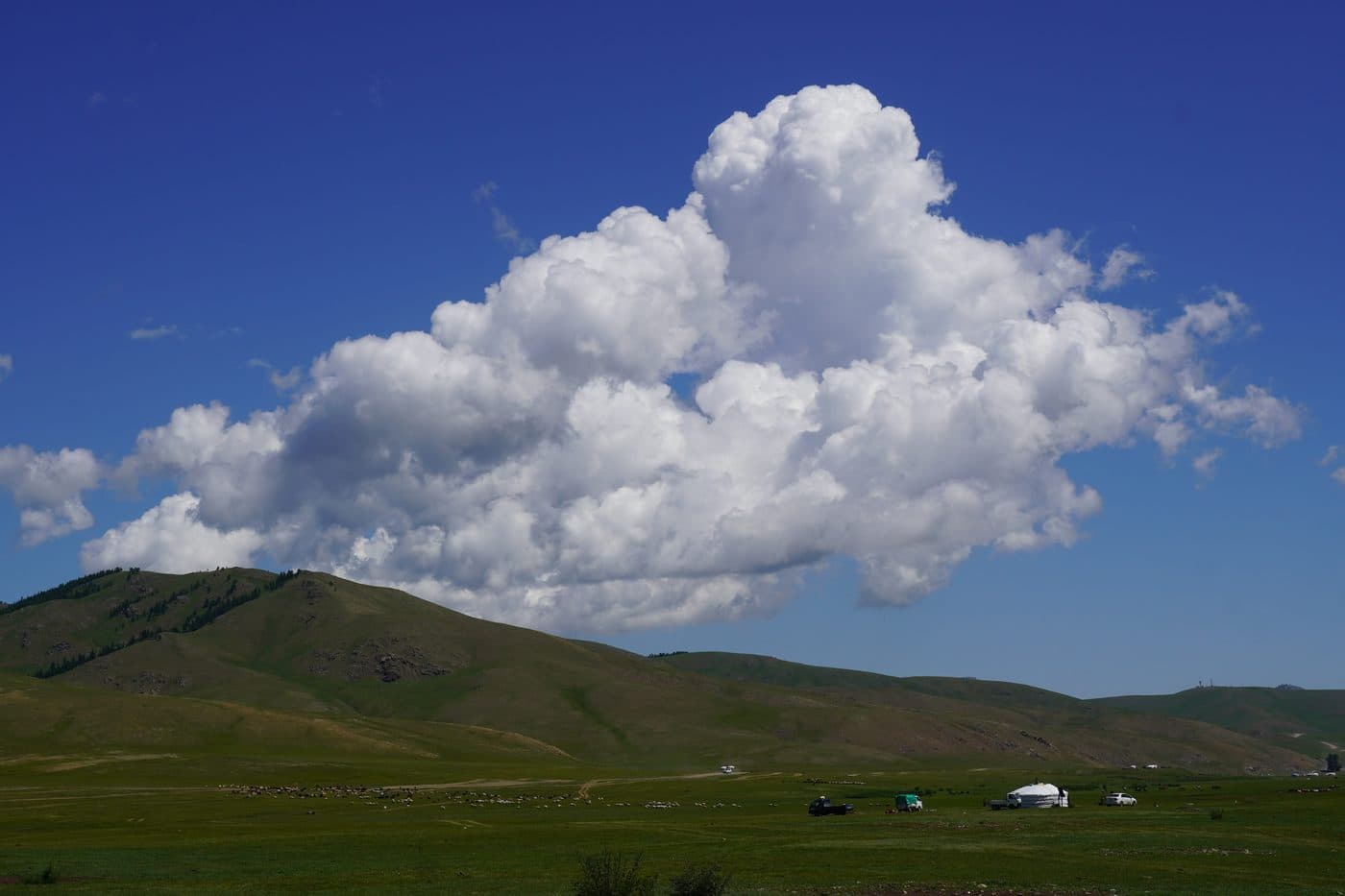
A ger is the white round tent you've seen in every Mongolia photo. Felt walls over a collapsible wooden frame, central stove, smoke hole at the top. Most herding families have one as their permanent home — it takes about two hours to assemble or take down.
When you stay, you're either sharing the family's ger or sleeping in a spare one pitched a few meters away — the one they keep for relatives and guests. There's no reception and no menu. There's a family, their animals, and you, dropped into the middle of an ordinary working day.
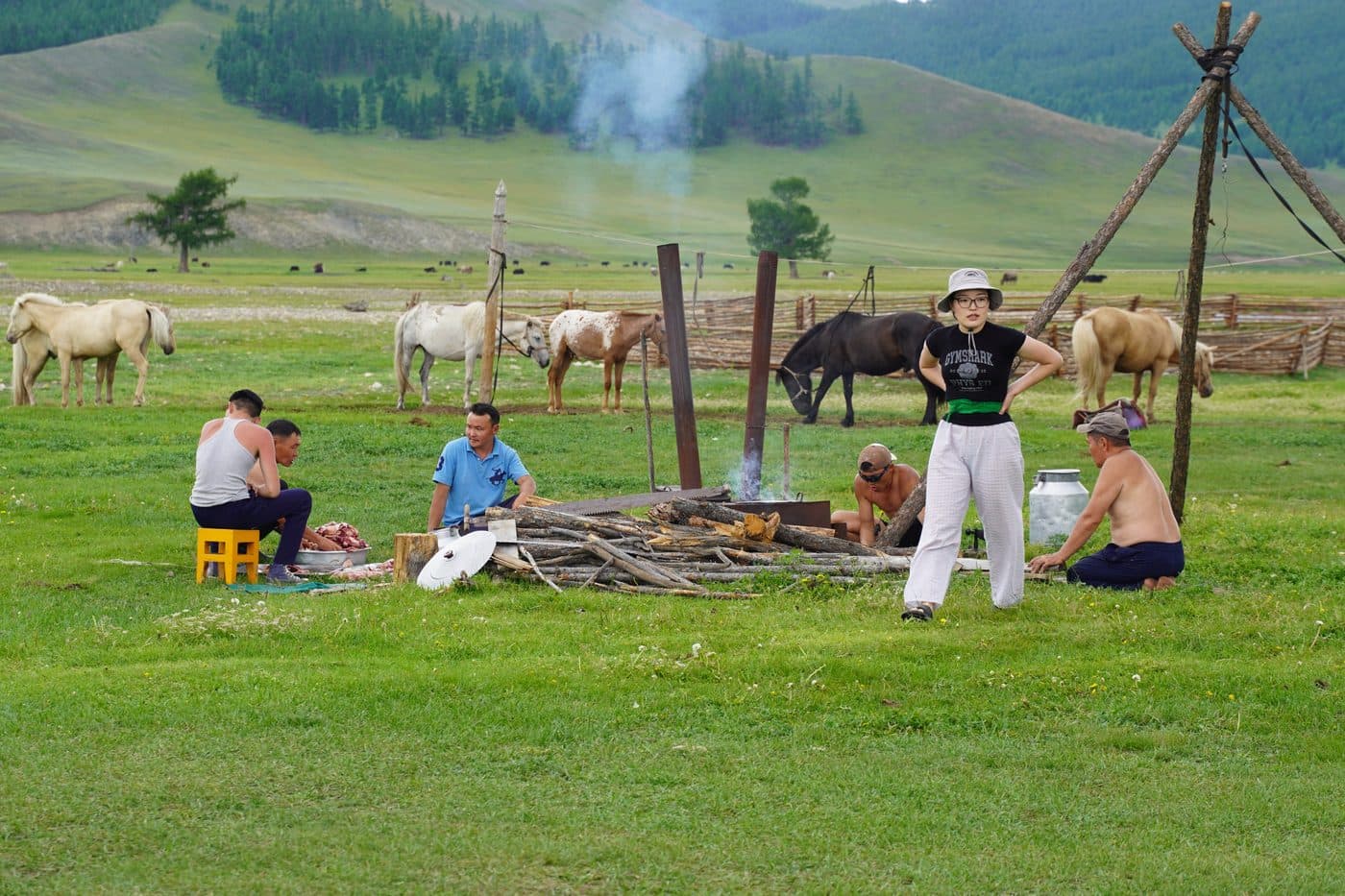
What that looks like in practice:
- Real life happens around you. Milking at dawn, the goats coming in, the kids doing homework by solar lamp, a neighbour dropping by for tea. You're not a guest at a show — you're just part of the day.
- The food is the family's food. Whatever's on the stove — buuz, mutton and noodles, fresh aaruul off the drying rack, milk tea that never stops coming.
- Amenities are basic and honest. An outhouse over a hole, a wash bowl, electricity only when the solar panel cooperates. Bedding is provided and usually clean.
- It's unpredictable, and that's the point. The best moments — being handed a newborn goat, a wrestling lesson from a teenager, a grandfather's throat-singing after dinner — are the ones nobody scheduled.
Inside, the layout is the same in every ger in the country, because it's tied to direction. The door faces south. The back wall (opposite the door) is north — the khoimor, where the family altar sits and where honored guests are seated. The east side is traditionally the women's side (kitchen, water, food); the west side is the men's (saddles, tools). The center is the stove. None of this is enforced strictly with foreigners — but if you understand the geometry, the rest of the etiquette makes sense.
What to bring
You don't need much for yourself — the family provides bedding and food, and your guide carries the rest. What actually matters is what you give. Don't bring money; it makes things weird. Bring something small from your country:
- Sweets or chocolate (kids love these; adults eat them with tea)
- A scarf, a postcard, a coin from where you're from
- School supplies if the family has kids — pens, notebooks, simple toys
- Reading glasses (cheap drugstore ones; older herders often need them and can't get them locally)
- A good bottle of vodka — in the right setting it's a respectful gift between adults. Offer it to the head of the household and let them do the pouring.
The actual rules — the ones that matter
Right foot in, don't step on the threshold
When you enter, lead with your right foot. Step over the wooden threshold at the base of the door, not on it. The threshold (bos) is symbolic — stepping on it is the equivalent of stepping on someone's spine. Easy to remember once you know.
Move clockwise
Once inside, move to the left (west) and circle clockwise around the stove. The host will gesture where to sit. If you're an honored guest, that's the north (khoimor) — facing the door, back to the altar.
Accept the tea
The first thing you'll be handed is milk tea — suutei tsai. Salted milk with brick tea boiled in. Some foreigners hate it. Drink some anyway. Refusing the first tea is the closest thing to a real insult I know in Mongolian hospitality. Even one sip is fine. After that you can decline more.
Don't point your feet at the altar
When sitting, don't stretch your legs out toward the north wall — that's where the family altar is. Cross your legs, tuck them under you, or angle them toward the door. Same logic if you're sleeping: head toward the altar, feet toward the door.
Don't touch the central posts
The two wooden poles (bagana) in the middle hold the roof up. Don't lean on them, don't pass things around them. Walking between the two posts is also avoided — walk around.
Use the right hand (or both)
When you're handed something — a bowl, the snuff bottle (khuurug), a piece of cheese — accept with your right hand, or both hands, never the left. The left is considered unclean (older taboo, still observed). Same when handing things over.
Don't whistle inside
Whistling inside the ger is bad luck. Hum if you must.
Don't put anything on the stove that isn't food or wood
The stove is sacred. No trash in it. No water poured on the embers. Don't step over it. Tugi's grandmother would call that down a whole generation.
Things foreigners worry about that don't matter
- The food is safe. Mutton is cooked thoroughly. Khuushuur, buuz, khorkhog — all fine. The dairy is fermented, which is its own preservation. You will not get sick. (You might, separately, decide you're not a huge fan of fermented mare's milk — that's allowed.)
- The dogs look terrifying, they're fine. Mongolian herding dogs are big, loud, and committed to their job. Don't run from them. Walk normally, let the family call them off. If you're approaching a ger from a distance, the herder will come out and the dogs will stand down.
- The smell of mutton fat in everything. Yes. That's the country. You stop noticing it by day two.
- You'll sleep poorly the first night. Probably. The second night you sleep like a stone.
How to leave on a high note
In the morning, help carry things out. Bring your bowl back to wherever it came from. Say bayarlalaa (thank you) to the woman of the house — she did most of the work even if you didn't see it.
If you took photos of anyone, ask before posting them anywhere. Most families don't mind, but some do. Either way, asking matters.
Tipping isn't expected in the countryside the way it is in cities. If you want to leave something, do it through your guide rather than handing cash directly — it lands better. A gift on departure is always welcomed.
Ger nights, properly
Every tour I run includes nights with families.
Actual families I know, in their actual gers. I handle the etiquette and the logistics so you don't have to memorize this list — you just show up.
See the 2026 trips →