Mongolia 101 · Naadam
Naadam in a village vs. Naadam in Ulaanbaatar: which one is actually Mongolia?
By Tugi · June 2026 · 6 min read
Mongolia's national festival is called Naadam — "the three games of men" — and every July 11–13 the country shuts down for it. Wrestling, horse racing, archery. If you Google "Naadam Mongolia," 90% of what comes back is footage of the Ulaanbaatar opening ceremony: 10,000 people in a Soviet-era stadium, drone shots of athletes in silk costume, the President walking out.
That's the version most tour operators sell. It's not actually the version most Mongolians experience.
Here's what's worth knowing if you want to go.
The Ulaanbaatar Naadam: what it really is
The UB Naadam at the Central Stadium is the national event. The opening ceremony on July 11 is legitimately spectacular — choreographed, televised, packed. If you've never seen 512 wrestlers walk into a stadium in lambskin briefs and elbow-length silk sleeves, it's worth seeing once.
But.
The stadium seats around 20,000 people, and during Naadam those tickets are gone months in advance (or scalped for $200+). Most foreign visitors end up watching it on TVs in restaurants. The horse racing happens 30 km outside UB at Khui Doloon Khudag — a separate trip, a separate crowd. The archery is in a different venue again. You don't actually watch all three sports in one place. You watch a procession, then catch fragments on a screen.
It's a great spectator event. It's a terrible immersion experience.
The village Naadam: what most foreigners don't see
Every soum (district) and every aimag (province) in Mongolia runs its own Naadam, usually a week or two before or after the national one. Same three sports, same costumes, same songs. Dramatically different scale.
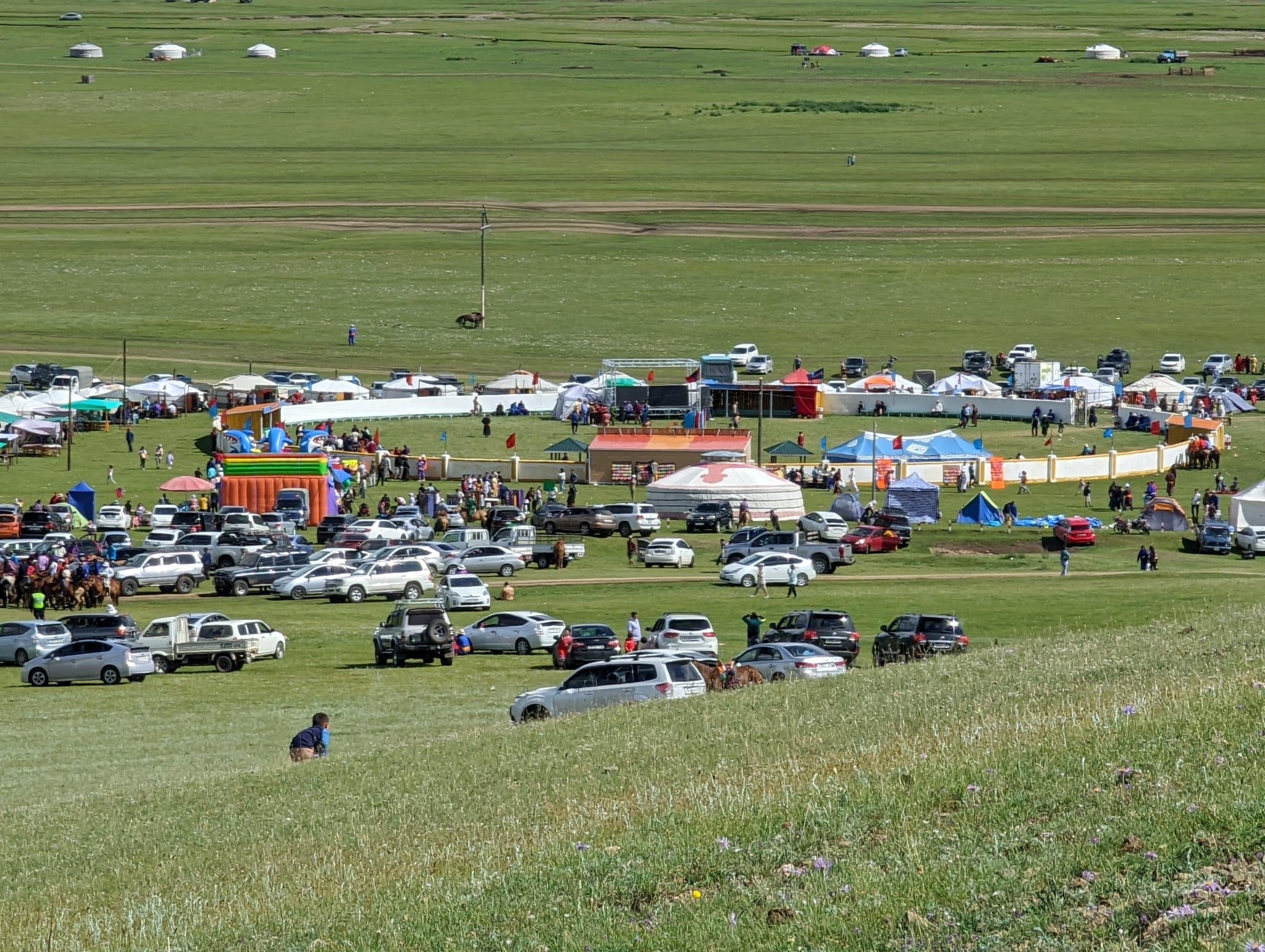
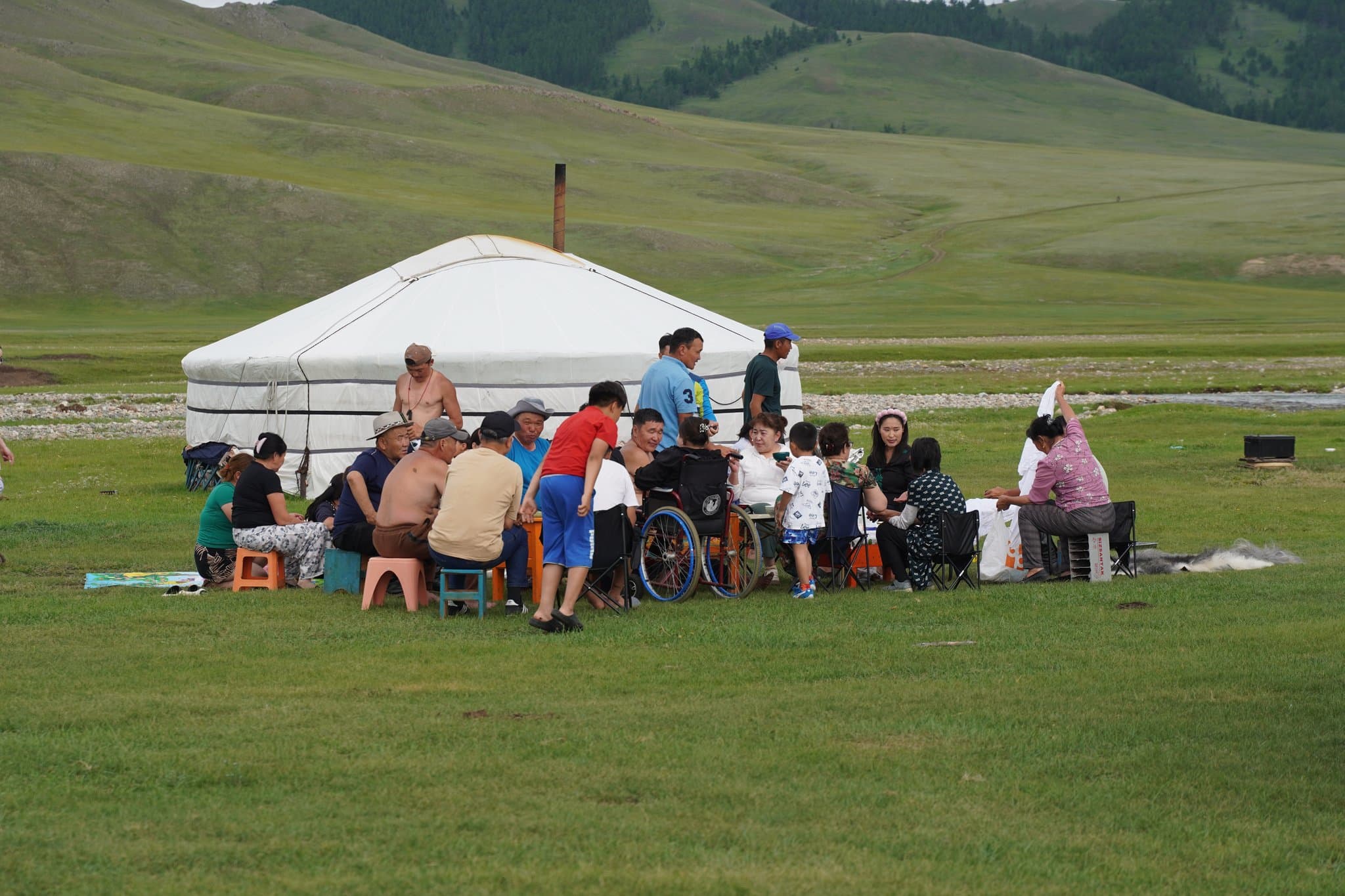
Take a soum in Arkhangai — a district center of a few thousand — where the local Naadam is the biggest day of the year. Families ride in from camps 50 km out. The wrestling happens on a grass field marked with rope. Twenty wrestlers compete instead of 512. You stand five meters from the bouts. You can talk to the wrestlers afterwards. Their grandmother is selling khuushuur (deep-fried mutton pancakes) two stalls over.
The horse races aren't broadcast. They happen on the open steppe with no track and no fence. You drive your jeep along the route to follow the finish.
The archery is the strangest one to a foreign eye. It's the quietest sport in the loudest village. Archers shoot at small leather targets stacked on the ground 65–75 meters away. A line of judges chants when a shot lands. The judges' chant is the only sound for thirty seconds, then another silent shot, another chant.
The wrestling, specifically
Mongolian wrestling (bökh) has no weight classes and no time limits. Two men, leather boots, embroidered shorts. First one whose knee, elbow, or back touches the ground loses. That's it.
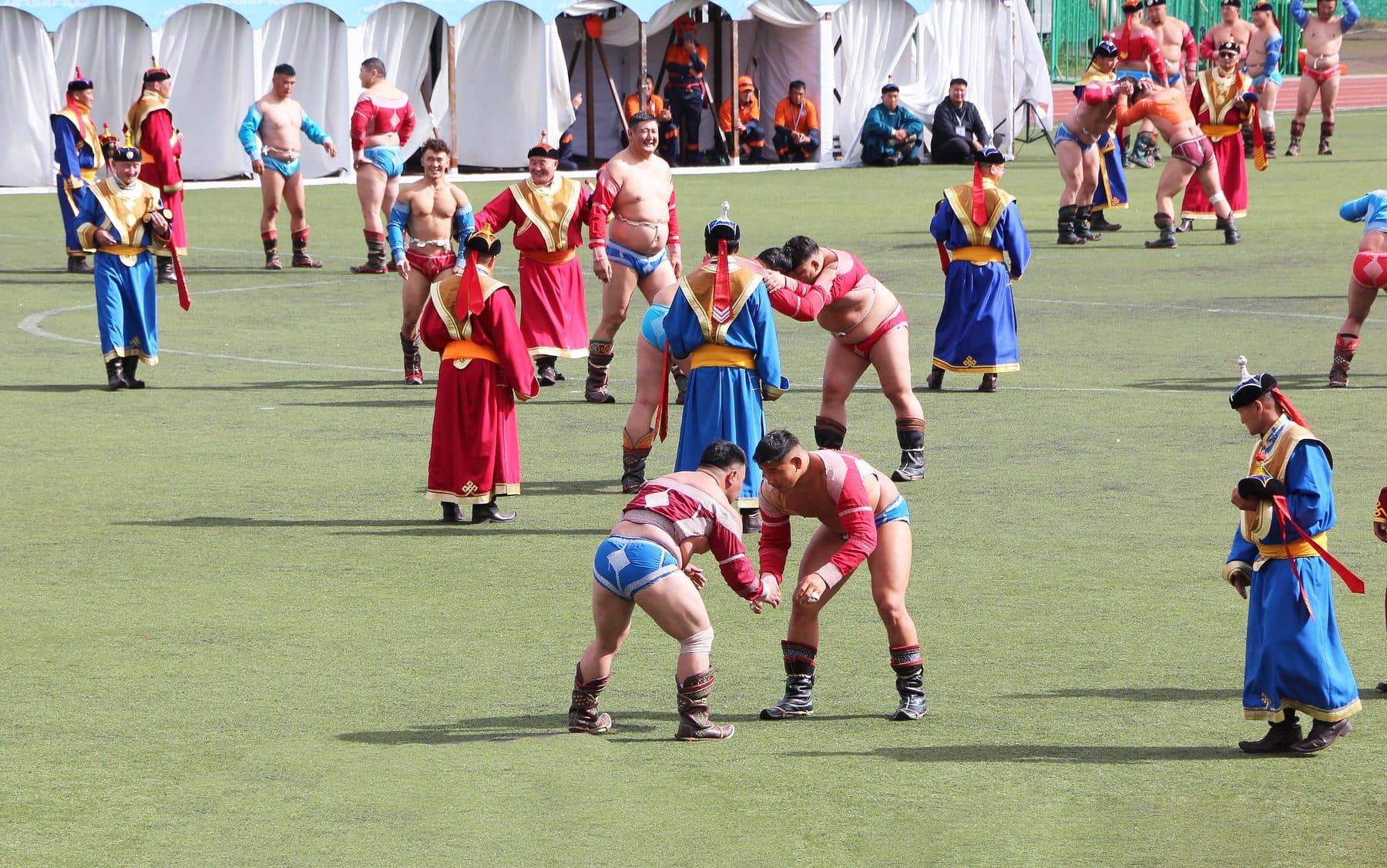
At the village level you'll see matches that last 30 seconds and matches that last 25 minutes. Pre-match, wrestlers do the devekh — the eagle dance — a slow circling stretch that imitates the takeoff of an eagle, hands extended, knees flexed. After winning, the eagle dance happens again — a victory lap, slower, with the wrestler eating aaruul (dried curd) from his pocket like nothing happened.
You'll see grown men hug each other afterward, no matter what. The losing wrestler walks under the winner's outstretched arm — a gesture of respect that's older than the Mongol Empire.
The horse racing
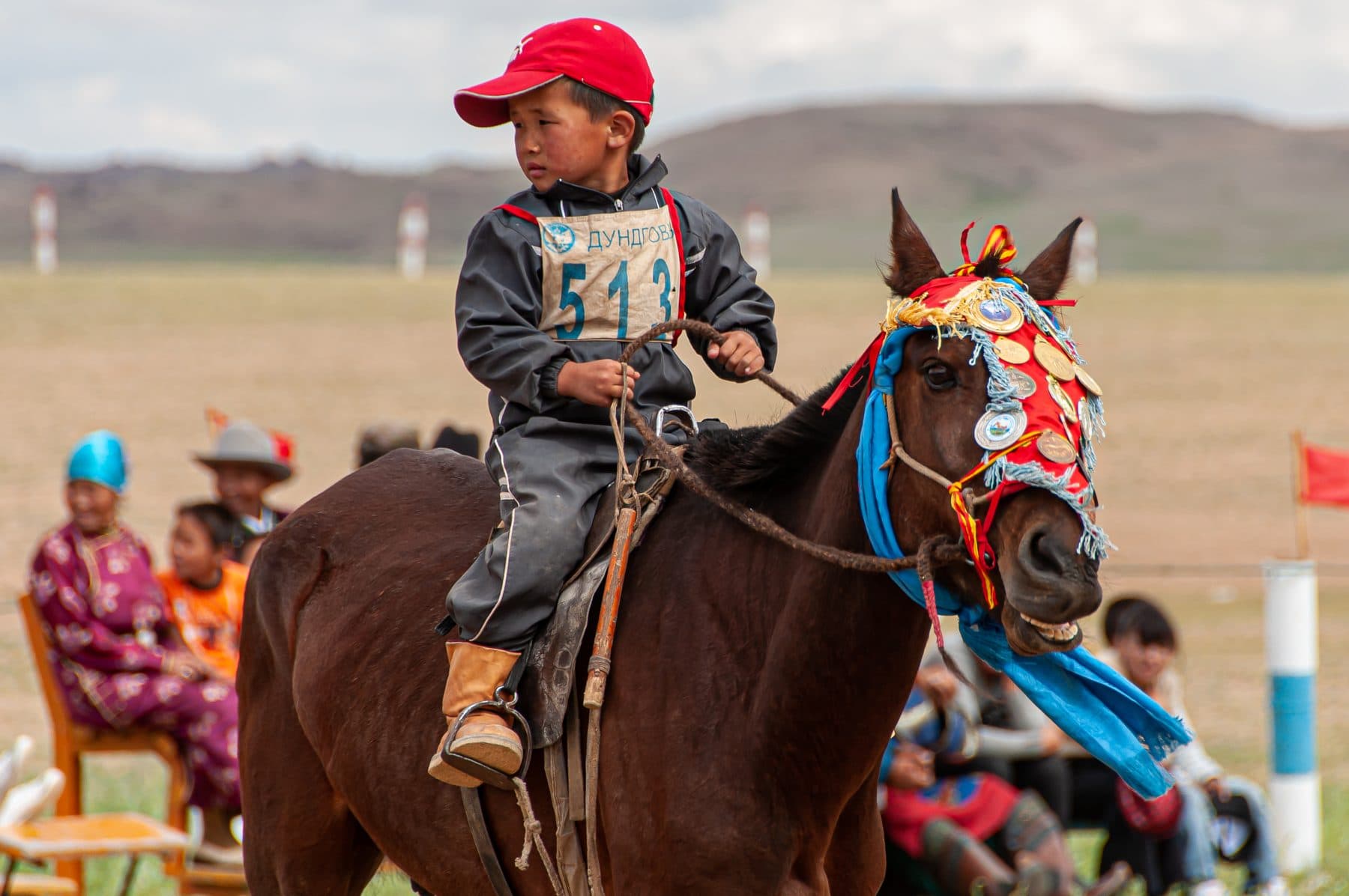
This is the bit no tour ever shows you properly: in Mongolia, the riders are children. Aged 6 to 12. They ride bareheaded on small Mongolian horses across distances up to 25 km on open steppe. There's no track, no protective gear, no padded landing. Just kids, horses, and grass.
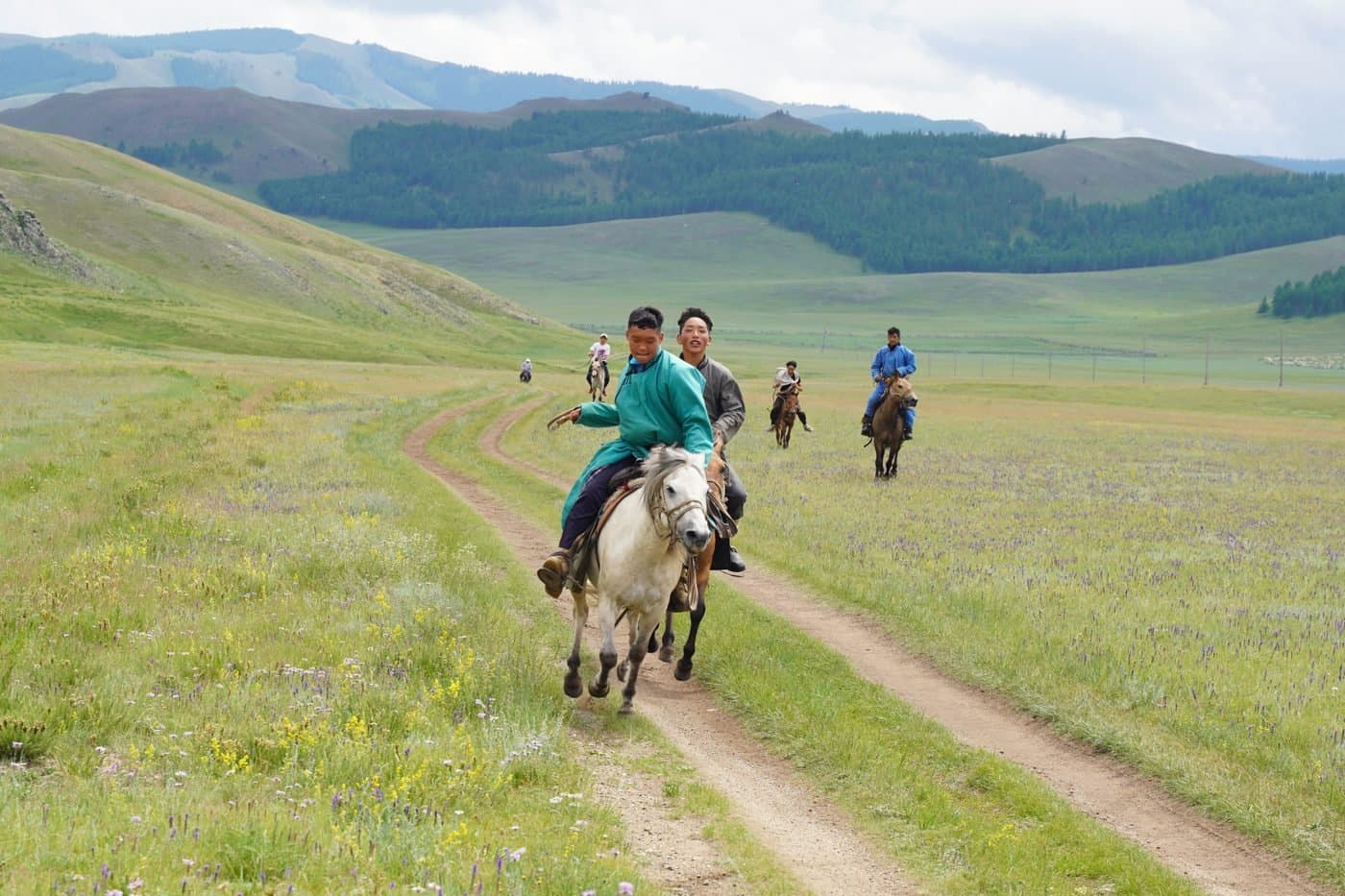
The horses are bred and trained by the families that race them. A winning horse is more famous in its village than its rider. After the race, the families wash the lead horse with airag (fermented mare's milk) and sing songs to it.
You don't watch this from a grandstand. You stand at the finish line and wait, and then a dust cloud appears on the horizon, and then it's hooves and small voices yelling "giin-giin" and the whole village runs out to check which horse came first.
That's Naadam. Not the stadium version.
Can you take part?
You can watch all of it up close, for free — no ticket, no registration. Walk right up to the wrestling field, stand at the horse-race finish, watch the archery from a few meters away.
The official competition is for locals — the jockeys are herding-family kids, the wrestlers register through the soum. But getting hands-on is easier than you'd think. Families will put a bow in your hands at the archery, pour you airag, pull you into the dancing. And the wrestling: outside the official bracket, a friendly bout with a local is fair game. Test your strength — you'll lose, and the crowd will love you for trying. Honestly it makes their day too; a foreigner stepping onto the grass is half the entertainment.
The real way in is to stay with a family near the event instead of day-tripping. Help cook, help prep the horses, sit through the long lunch — and somewhere in there you stop being a spectator and start being part of the day.
How to choose
Two things to know:
If you have 1–2 days in Ulaanbaatar over July 11–13, the UB Naadam is the only option that fits. Go to the opening ceremony if you can get a ticket. Then watch the wrestling on a TV with locals at a place like Beatles Pub (yes, really, that's a real bar in UB).
If you have 4+ days and want to see Mongolia actually do Naadam, drive west. Village Naadams happen between roughly July 1 and July 20, depending on the soum's calendar. You won't find dates on Google — you have to ask a local guide which village is hosting when. That's the whole reason to use a guide for this.
Practical notes
- National Naadam dates: July 11–13, every year.
- Village Naadam dates: flexible, July 1–20, varies by location.
- What to bring: sun protection (no shade on the steppe), a phrasebook ("sain bain uu" = hello), and cash for khuushuur and airag. ATMs don't exist outside province capitals.
- What to wear: something modest. Naadam is a national-pride event; locals dress up. Foreigners showing up in beach shorts get a mild side-eye.
The trip
I run a Naadam tour in Arkhangai.
Seven days, July 8–14, 2026 — based with my own relatives near Tsetserleg for a local soum Naadam (not the UB stadium), plus the Orkhon Valley, Terkhiin Tsagaan Nuur, and Tsenkher hot springs. Small group of 5–7.
See the Naadam trip →